Carlos Di Sarli, 1945
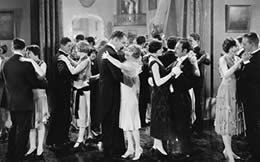 |  | Picture a milonguero from the Golden Age, dressed to impressed: suit, hat, tie, shining shoes… Imagine the countless sleepless nights he spends dancing until the small hours, the sleepless nights he spends absorbed in ‘milonguear’ (touring milongas), as one says in Buenos Aires. Now try to empathise with him as he realises that what he took for a love embrace, merely was a tango embrace. |
The story behind Porteño y bailarín
With its numerous references to themes commonly found in tango songs, Porteño y bailarín is as poetic, romantic and bittersweet as its hero. ‘Casita melancólica’ is an allusion to a small rundown house from one of the poor suburbs that surround Buenos Aires, the ‘arrabales’, another frequent tango theme. Its melancholy aspect comes from its being beyond reclaim. ‘Mis cuerdas’, which literally translates as ‘my cords’ is an implicit reference to guitar strings, which often appear as protagonists in tango songs, in folklore songs and poems.
Di Sarli composed Porteño y bailarín in 1945, at the height of his career.
This song has been translated by Tanguito, Argentine Tango Academy in London. We hope you enjoy this translation. If you have any comments, don’t hesitate to drop us a line.
The music
The lyrics
| Porteño y bailarín, me hiciste tango, como soy: Romántico y dulzón… Me inspira tu violín, me arrastra el alma de tu compás, me arrulla el bandoneón… Melancólica casita, suspirando amor, le di en tus puertas mi querer, y en tu criolla ventanita recostada al sol, rompió mis cuerdas el ayer. Todo mi drama está en tu voz, manos en adiós, labios en carmín… Por ella y por su amor me hiciste tango, como soy: ¡Porteño y bailarín! Qué importa el sueño, Porteño y bailarín, resuena tango… que en tu voz | A porteño(1) and a dancer, you made me, tango, the way I am: Romantic and sweet… Your violin inspires me, the soul of your beat draws me, the bandoneon(2) lulls me… Melancholic little house, longing for love, at your doors, I gave her my love, and at your small traditional window leaning against the sun, the past broke the strings of my guitar. All my drama is in your voice, hands in good byes, lips in red… Because of her and because of her love, you made me, tango, the way I am: a porteño and a dancer! What does it matter A porteño and a dancer, resound tango… so that in your voice, today I live an epic novel. |
(1) Porteño: an inhabitant of Buenos Aires. The word comes from ‘puerto’, ‘port’ and means ‘people from the port’. From the 19th century until the middle of the 20th century, the port of Buenos Aires was a major commercial hub and employment centre and played an important role in the economic activity of the city and the country.
(2) Bandoneon: a small accordion.